If you're choosing your first dwarf shrimp, you're really choosing between two genera: Neocaridina (Cherry shrimp and their many color morphs) and Caridina (Crystal Reds, Crystal Blacks, Tiger shrimp, Taiwan Bees). They look superficially similar in a tank — both small, both grazing, both photogenic. But they require fundamentally different water chemistry, and starting with the wrong one for your situation is the single most common reason new shrimp keepers fail.
This article will tell you which to pick. The short version: almost everyone should start with Neocaridina. The longer version explains why, and tells you how to know if you're the exception.
The genuine difference
Neocaridina and Caridina evolved in different freshwater environments. Neocaridina davidi is native to China, South Korea, and Taiwan, where it occupies streams and ponds with moderate hardness and roughly neutral pH. Caridina cantonensis — the species behind Crystal Reds, Crystal Blacks, and most "bee" type shrimp — comes from soft, mineral-poor waters with low pH, often in shaded forest streams.
When breeders of both species describe their needs, the parameter ranges look like this:
| Parameter | Neocaridina | Caridina (CRS/CBS/Bee) |
|---|---|---|
| pH | 6.8–7.8 | 5.8–6.8 |
| GH | 6–10 °dGH | 4–6 °dGH |
| KH | 2–6 dKH | 0–2 dKH |
| TDS | 180–300 ppm | 100–200 ppm |
| Temperature | 68–76°F | 68–74°F |
Notice the parameter ranges don't overlap meaningfully. Neocaridina want harder, more alkaline water; Caridina want softer, more acidic water. Neocaridina shrimp prefer harder water with a slightly alkaline pH, while Caridina shrimp typically require softer water with a lower pH. There's no shared "good for both" range. If you see a tank advertised as housing both, one species is thriving and the other is just enduring.
Recommended gear for this article
All affiliate links · we earn a small commission at no cost to you



Why this matters more than it sounds
For Neocaridina, most municipal tap water in the US is workable as-is. You may need to nudge GH up with crushed coral or a remineralizer, but the baseline is usually close enough that a few small adjustments get you to a stable tank.
For Caridina, you almost certainly need to start over. The standard Caridina setup uses RO (reverse osmosis) or RO/DI water — water that has been stripped of all minerals — with a Caridina-specific remineralizer added back to hit precise GH and TDS targets. You also need an "active substrate" like ADA Amazonia or Brightwell Shrimp Soil that buffers the water down to the low pH Caridina prefer. Caridina shrimp require more consistent water parameters and often do best in tanks using active substrate (like ADA Amazonia or similar) and RO water with remineralisers.
This isn't optional gear. A Caridina tank without RO water and active substrate will mostly kill its inhabitants. You're committing to:
- An RO unit (one-time purchase, $80–200) or buying RO water from a fish store
- A Caridina-specific remineralizer (Salty Shrimp Bee GH+ is the common choice — note this is a different product than the Neocaridina version)
- Active substrate that buffers acidic, which costs more than inert substrate and exhausts itself in 1–2 years and needs replacing
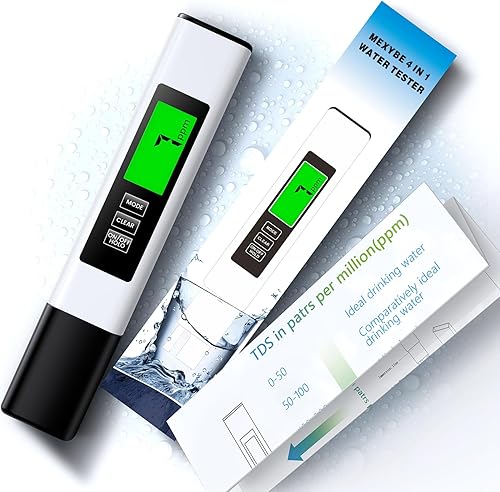
- A reliable TDS meter, which is critical rather than optional in a Caridina tank
The total cost of entry for a properly set up Caridina tank is several times that of a Neocaridina setup. The ongoing maintenance is more demanding too — water changes have to use precisely matched RO water, and parameter drift is much less forgiving.
The genetics problem
There's a separate, less obvious reason Caridina are harder. Conventional shrimp-keeper wisdom holds that the original Crystal Red strain was bred from a very small founding population, making the line extremely inbred and sensitive. This explains why they are much more sensitive and not as forgiving as Cherry shrimp.
Whether the original-three-shrimp story is literally true or apocryphal, the broader point holds: high-grade Caridina morphs (Crystal Reds at S+ grade, Taiwan Bees, Pintos) come from severely bottlenecked breeding lines. They are genetically less robust than wild-type stock. They die from things wild Caridina would shrug off. This is the price of the dramatic patterns — concentrated genetics produce concentrated visual traits and concentrated weaknesses simultaneously.
Lower-grade Caridina (lower-grade Crystal Reds, basic Bee shrimp) are noticeably hardier than the high-grade lines. If you're set on starting with Caridina anyway, lower-grade stock is the right entry point. Spending $40 on a single high-grade Taiwan Bee as your first shrimp is how people learn the hard way.
Visual differences

The species themselves don't look identical, even setting aside the colors.
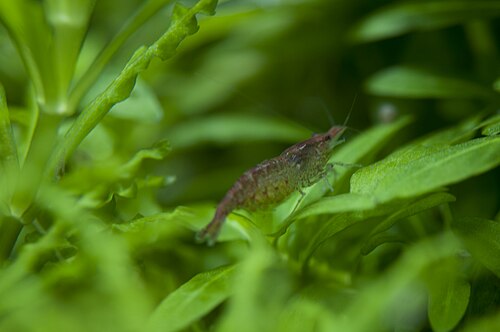
Neocaridina are slightly smaller-bodied, with simpler color patterns — solid reds, blues, yellows, greens, oranges. Most morphs are single-color. The wild-type is a translucent brownish.
Caridina are slightly larger and more architecturally interesting. The classic Crystal Red and Crystal Black patterns feature distinct red-and-white or black-and-white banding; Tiger shrimp have lengthwise tiger striping; Pintos have intricate dots and patches. Taiwan Bees push pattern complexity further still. The wild-type Bee shrimp is a banded brown-and-cream.
Both can interbreed within their own genus to produce mixed colors (which is why mixing color morphs of the same genus quickly produces wild-type-looking offspring), but Neocaridina and Caridina cannot interbreed across genera. Crystal red shrimp are Caridina and cherry shrimp are Neocaridina. They cannot interbreed.
Decision tree
Some honest filters to figure out which is right for you:
Start with Neocaridina if any of these are true:
- This is your first shrimp tank
- You haven't kept a planted tank stable for at least six months
- You don't currently use RO water for anything
- You want to see baby shrimp within a few months
- Your water is hard out of the tap (the common case in North America)
- You want shrimp as part of a community aquarium
Consider Caridina only if all of the following are true:
- You've successfully kept a Neocaridina colony for at least a year
- You're comfortable with RO water and remineralizing precisely
- You're willing to dedicate a tank exclusively to shrimp
- You've researched specific parameter targets for your chosen morph
- You understand that high-grade lines die more easily than basic stock
There's no shame in staying with Neocaridina forever. A well-kept colony of high-grade Bloody Mary or Blue Dream cherry shrimp is genuinely beautiful, costs a fraction of the Caridina path, and is much more interactive — you'll see breeding, molting, baby development, color changes through generations. Many shrimp keepers run Neocaridina tanks for years and never feel like they're missing out on Caridina.
One important exception: Amano shrimp

Amano shrimp (Caridina multidentata) are technically Caridina but break almost every rule above. Amano shrimp can be acclimated to both low pH and high pH environments, they're large (1.5–2 inches at full size), exceptionally hardy, and unmatched as algae cleanup crews. They also don't breed in fresh water — they require brackish conditions for the larval stage — so a tank of Amanos won't multiply on you.
If you want a Caridina species without the Caridina hassle, Amanos are it. They're not pretty in the same way Crystal Reds are; they're a clear, slightly brownish-grey with subtle markings. But for tank-cleanup utility per dollar, nothing else matches them.
What I'd actually recommend
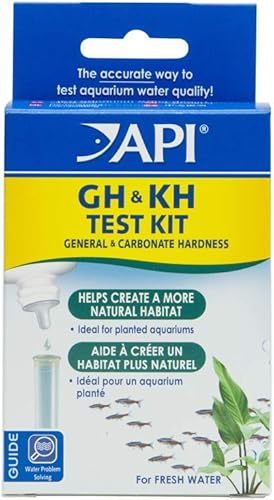
If you're new: Neocaridina, color of your choice (Cherry, Blue Dream, and Yellow Goldenback are the easiest entry-level morphs), 10 individuals to start, in a planted 5–10 gallon tank with a sponge filter, after the tank has been mature for at least six weeks. Add a GH/KH test kit and a TDS meter to the basic ammonia-nitrite-nitrate-pH liquid kit. Skip the active substrate; inert sand or fine gravel is cheaper and works.
If you have one Neocaridina tank running well and want to level up: a separate Caridina tank with the proper RO/active-substrate setup, starting with low-grade Crystal Reds rather than high-grade. Once those breed reliably for six months, you'll know enough to consider Taiwan Bees or Pintos.
The trap is doing both at once. New shrimp keepers regularly buy a Caridina tank and a Neocaridina tank simultaneously, get overwhelmed by two parallel parameter regimens, and lose colonies in both. Learn one set of dynamics first.
Recommended gear
| Product | When you need it |
|---|---|
| Salty Shrimp GH/KH+ (Neocaridina) | If you're starting with Neocaridina and using RO water |
| Salty Shrimp Bee GH+ (Caridina) | If you've crossed into Caridina territory |
| API GH & KH Test Kit | Both genera; non-negotiable |
| TDS meter | Both genera; critical for Caridina |
| Sponge filter + air pump | Standard filtration for any shrimp tank |
| Active substrate (Caridina only) | Only if Caridina; ADA Amazonia or Brightwell Shrimp Soil |
Some links in this article are affiliate links — if you buy through them we earn a small commission at no extra cost to you. We only recommend gear we've personally used.