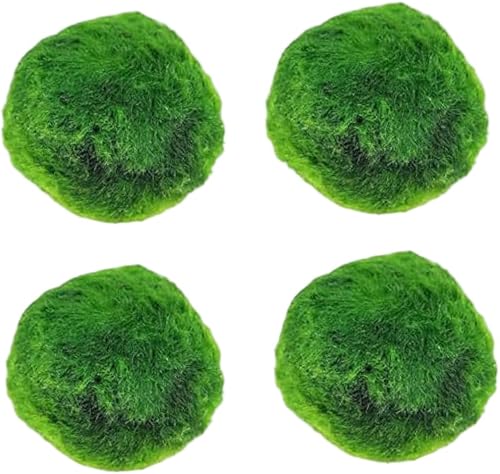
The marimo "moss ball" sitting in a jar at every pet store is one of the strangest things in the aquarium hobby. It's not moss. It's not even a single organism in the way a plant is. It's a colony of filamentous green algae that, under specific lake conditions, has been rolled into a sphere by gentle currents over decades. The wild ones in Lake Akan in Hokkaido reach the size of basketballs and live for over 200 years. The one in your tank is genuinely the same species — Aegagropila linnaei — just smaller and younger.
There's a real reason marimo are nearly universal in shrimp tanks. They produce dense biofilm — the microbial mat shrimp graze on continuously — across a large surface area, in a low-maintenance form factor, at low cost. A shrimp tank with a few marimo grazing balls effectively has more food production than one without.
But there's also something serious to know first.
Important: zebra mussel contamination
Before any care advice, the public-health-of-aquatic-ecosystems concern. Beginning in February 2021, U.S. authorities discovered that invasive zebra mussels were attached to and inside Marimo moss balls sold at aquarium and pet supply stores, garden centers, florist shops, and online retailers. The contaminated moss balls — wild-harvested in Ukraine and shipped through U.S. distributors — were found in 46 states by April 2021 and prompted a nationwide recall through Petco and PetSmart.
The problem hasn't fully stopped. On August 5, 2024, zebra mussel-infested Marimo moss balls were detected at an aquarium wholesaler in Washington state, prompting a renewed call to inspect any moss balls of uncertain provenance.
Zebra mussels (Dreissena polymorpha) are one of the most destructive aquatic invasive species in North America. A few mussels released into a storm drain or aquarium-water dump can establish a population that creates over $100 million worth of damage each year to dams, agriculture, salmon and more in waterways they invade.
If you have moss balls of unknown origin or purchased before mid-2024: inspect them carefully. Zebra mussel larvae are microscopic, but adult mussels are visible — small, D-shaped, striped shells, often clustered in the moss ball's outer fibers. If you see anything that looks like a small mussel, do not flush, drain, or compost the moss ball. Contaminated moss balls must destroyed (either by freezing, boiling, or bleaching), disposed of in a sealed plastic bag in the trash, and your aquarium must be drained and decontaminated.
The U.S. Fish and Wildlife Service has detailed inspection and decontamination instructions at fws.gov. Reports of contamination should go to your state natural resource agency and the USGS NAS database.
If you're buying new: marimo themselves are not illegal. The contamination only affected wild-harvested products, particularly from Ukraine. Cultivated marimo from reputable suppliers — Japanese, Estonian, or domestic aquarium nurseries — have not been the contamination source. Ask sellers explicitly about origin.
This is a heavy disclaimer for what's otherwise a friendly plant-care article, but it's the most important part. Now to the actual care.
Recommended gear for this article
All affiliate links · we earn a small commission at no cost to you

What marimo actually are

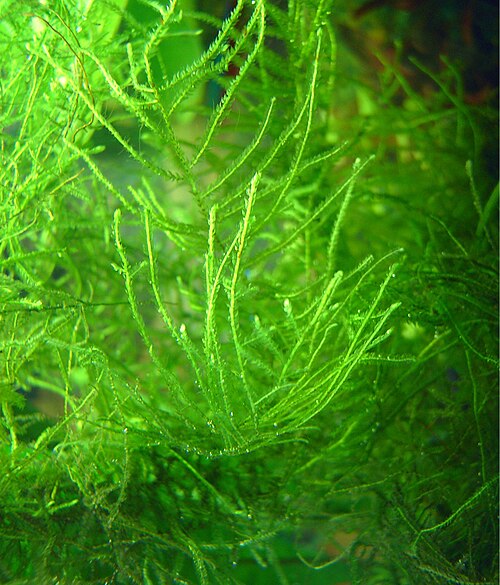
Marimo are spherical colonies of Aegagropila linnaei, a filamentous green algae found in cold-water lakes across the Northern Hemisphere. The species exists in three growth forms: free-floating filaments, mats attached to rocks, and the rare ball form. The ball form develops where lake currents continuously rotate algae filaments along sandy or muddy bottoms, packing them into dense spheres. The rotation also ensures every side of the ball receives sunlight, which is why they're green throughout rather than only on the surface.
Lake Akan in Japan is home to the largest known populations, with balls reaching 8–12 inches and occasionally larger. Lake Mývatn in Iceland hosts the only other naturally-occurring spherical population. The aquarium-trade marimo come either from cultivated populations or — more commonly than the trade admits — from semi-wild sources where filamentous algae is rolled by hand into ball form. Genuinely wild-harvested marimo from Lake Akan are protected and not sold; the species has been a national treasure of Japan since the 1920s.
A few things follow from this biology that affect how to keep them:
Marimo grow slowly. Very slowly. Roughly 5mm per year under typical aquarium conditions. The wild ones in Iceland that reach 10–12 cm took decades to get there. If your marimo doesn't visibly grow over months, that's not a problem — it's the species.
Marimo prefer cool water. Native habitat is cold lakes — temperature ranges of 50–68°F. They tolerate warmer aquarium water (up to about 77°F) but warmer water shortens their lifespan and makes them more prone to brown patches. Above 80°F they begin breaking down. This is why many keepers refrigerate stressed marimo to revive them.
Marimo are slow-growing photosynthesizers. They produce oxygen and absorb nitrate from water, but at a much slower rate than typical aquarium plants. A 10-gallon tank with three small marimo gets a small but real reduction in nitrate accumulation; this is a bonus, not a substitute for water changes.
Why shrimp tanks specifically benefit
The fibrous outer surface of a marimo is an ideal substrate for biofilm — the microbial mat of bacteria, algae, and protozoa that develops on every wet surface in a mature aquarium. Shrimp graze on biofilm continuously; it's the primary food source for shrimplets in their first two weeks of life and a substantial part of adult diet.
A marimo's surface area-to-volume ratio is unusually high for its size. A 2-inch marimo has visibly more grazable surface than a 2-inch flat rock or a 2-inch piece of driftwood, just because of the dense fibrous structure. In a small shrimp-only tank, even one or two marimo noticeably increase the available grazing area.
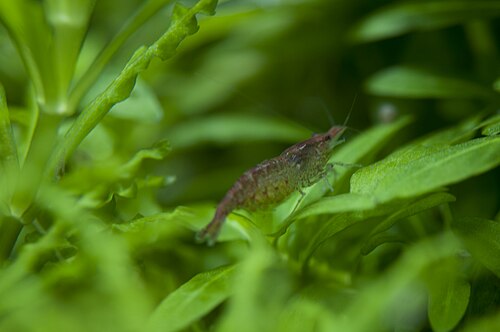
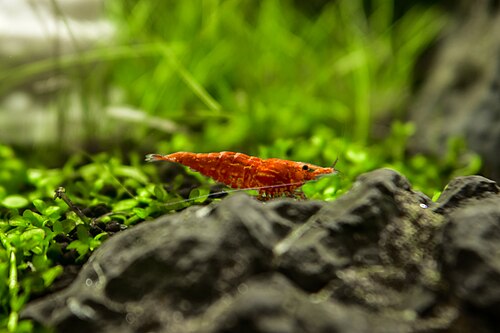
Practically: drop a few marimo into a Neocaridina or Caridina tank and the shrimp will spend hours on each one, picking biofilm from every angle. Some keepers report their shrimp roll the marimo around, which is partly true and partly anthropomorphism — the shrimp aren't trying to keep the ball spherical; they're just feeding heavily on whatever face is currently up.
Keeping them round
A marimo's spherical shape comes from continuous rotation in lake currents. In a still aquarium, it doesn't naturally rotate — the same face stays up indefinitely, the lit side photosynthesizes faster, and over time the ball flattens or develops dark patches on the perpetually-shaded side.
The fix is simple: every week or two, when you're doing other tank maintenance, gently roll the marimo in your hands or rotate it 90° in the tank. That's it. Some keepers do this during water changes; others do it whenever they notice the marimo is getting flat-looking. The goal is just to make sure all sides get light over time.
If a marimo has developed a flat patch or a brown spot on one side, rotate the brown side toward the light for a few weeks and it usually recovers. If brown patches are persistent across multiple sides, the underlying issue is usually water that's too warm or too dirty.
Cleaning, water changes, and "the squeeze"
Marimo accumulate detritus inside their fibers over time. Once every 4–8 weeks, lift the marimo out, place it in a bowl of dechlorinated tank water, and gently squeeze it like a sponge. Brown water will come out — that's accumulated waste being expelled. Squeeze until the water runs reasonably clear, then gently re-shape the ball by rolling it between your palms.
Don't squeeze a marimo with tap water unless it's been dechlorinated; chlorine and chloramine kill the algae just like they kill biofilter bacteria.
If a marimo loses its shape entirely or breaks into pieces, all is not lost. Each fragment is its own organism and will continue growing. Roll the fragments back into smaller balls between your palms and place them back in the tank — over time they'll re-form. Some keepers deliberately split larger marimo to propagate them; the daughter pieces are sometimes called "babies" and are exactly the same species, just younger.
Light, water, and tankmates
Marimo prefer low to moderate indirect light. Direct sunlight on a tank with marimo causes brown spotting fast. Under typical aquarium LED lighting at moderate intensity, they're fine.
Water parameters are forgiving. Cold, freshwater with a pH of 6.0–8.0 works. They tolerate the parameter range of any standard freshwater tank — Neocaridina, Caridina, betta, community fish — without modification.
Compatible tankmates: shrimp (any), snails (any), small peaceful fish, plecos that don't dig, livebearers, tetras, rasboras. The species marimo cannot live with: large goldfish, cichlids, large plecos, and any fish that destructively forages — they will tear marimo apart for fun.
A subtle compatibility note: large mystery snails or apple snails will eat marimo as food. Nerite snails generally won't. If you have unidentified larger snails, watch for damage.
Lifespan, longevity, and inheritance
Marimo can live for over a century in good conditions. Aquarium-kept marimo typically live 5–10 years; those kept in dedicated, cool, clean glass jars with periodic water changes can live considerably longer. There's a Japanese tradition of passing marimo down through generations, which is achievable with modest care.
Practically, this means: when you buy a marimo, you're not buying a plant with a one-year lifespan. You're acquiring something that, with minimal intervention, can outlast your aquarium hobby itself. The "rotate it weekly, squeeze it monthly" routine costs a few minutes a month and produces a living organism that will be in your home for the rest of its functional life.
For shrimp keepers specifically: a small colony of marimo balls is among the highest-value-per-dollar additions you can make to a shrimp tank. They produce continuous food, occupy minimal space, never need replacing, and never compete with other plants for nutrients. Most experienced shrimp keepers have at least a few in every tank.
Some links in this article are affiliate links — if you buy through them we earn a small commission at no extra cost to you. We only recommend gear we've personally used.