A healthy Neocaridina colony grows like a slow-motion explosion. You start with ten shrimp, six months later you have sixty, and a year in you're bagging up surplus to give away. So when your colony just sits there — the same dozen shrimp month after month — something specific is wrong, and it's almost always one of the same five things.
This article walks through those five, in roughly the order you should suspect them. Cherry shrimp are not delicate. The advice "they breed like crazy if you leave them alone" is mostly true. When breeding stalls, the cause is usually a fixable environmental problem rather than anything about the shrimp themselves.
First, the easy disqualifiers
Before troubleshooting anything chemistry-related, rule out the boring possibilities.
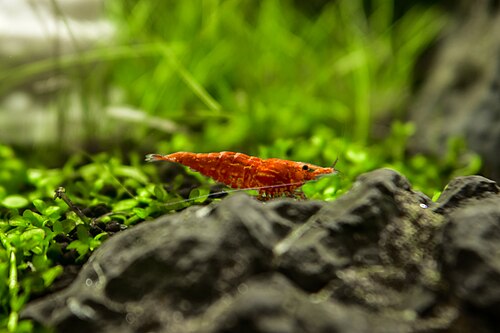
Both sexes present. This sounds obvious, but a surprising number of stalled colonies turn out to be all-female or all-male. Females are larger, more colorful, and develop a "saddle" — a yellowish patch behind the head where eggs develop before being passed to the swimmerets. Males are smaller, less intensely colored, and have a straighter underline. If you're staring at a tank of ten shrimp and you can't pick out at least two clear females and two clear males, that's your problem.
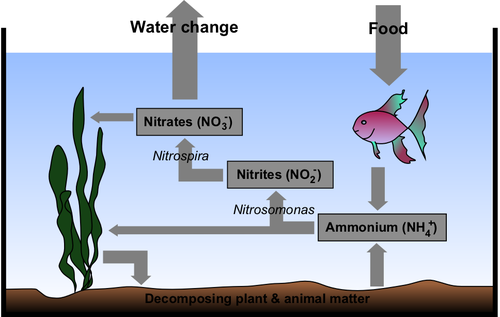
Tank is mature, not just cycled. A new tank that completed its nitrogen cycle two weeks ago is not the same as a mature tank. Shrimplets in their first weeks of life depend on biofilm — the microbial mat that grows on every wet surface — for their primary food source. A glassy-clean new tank lacks the biofilm density to feed shrimplets even if the adults survive fine. Most experienced shrimp keepers wait six to eight weeks after cycling before adding shrimp, and longer than that before expecting babies to survive. If your tank is less than three months old and your shrimp haven't bred yet, the boring answer is "wait."
Temperature high enough. Below about 68°F (20°C), Neocaridina enter a kind of metabolic standby — they survive fine, but reproduction slows or stops. The sweet spot for active breeding is 72–76°F. If your tank room is cold and you don't have a heater, that's likely all that's happening.
If those three are all in order and you still have a stalled colony, you're looking at one of the harder problems.
Recommended gear for this article
All affiliate links · we earn a small commission at no cost to you

Problem 1: GH is too low
This is the single most common silent cause of failed breeding.
Shrimp build their exoskeletons from calcium and magnesium dissolved in your water. The measure of those minerals is general hardness, or GH, expressed in degrees (°dGH). Neocaridina need a GH of roughly 6–10 °dGH for proper exoskeleton formation. Below GH 4, shrimp cannot complete molts properly, females cannot produce viable eggs, and shrimplets die before reaching maturity.
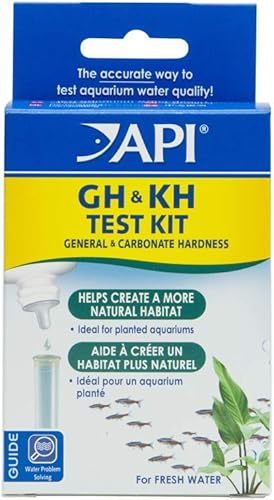
This problem is invisible on a basic test kit. The standard ammonia-nitrite-nitrate-pH kit tells you nothing about hardness. You need a separate GH/KH drop kit. A shrimp keeper without a GH test kit is flying blind on the parameter that matters most.
If your GH is below 6, you have two options. If you're using tap water, you can usually raise GH gradually with crushed coral, cuttlebone, or aragonite in your filter — these slowly dissolve and add calcium carbonate. If you're using RO or distilled water, you'll need a shrimp-specific remineralizer. Salty Shrimp GH/KH+ is the standard recommendation in the hobby because it's been formulated for exactly this purpose and dosing is predictable.

Whichever method you use, raise GH gradually — 1° per week at most. A sudden hardness change is itself a stressor that can suppress breeding for weeks.
Problem 2: Parameter swings
If your test kit shows acceptable numbers but breeding still isn't happening, the question to ask is: are those numbers stable, or are they bouncing around between water changes?
Shrimp respond to stability more than to specific values. A tank that holds steady at pH 7.4, GH 8, TDS 280 will outbreed a tank with "ideal" parameters that swing between water changes. The mechanism is partly behavioral — shrimp under chemical stress redirect energy from reproduction to survival — and partly developmental: berried females routinely drop their eggs prematurely in response to parameter shocks.
Common swing causes worth checking:
- TDS drift between water changes. TDS (total dissolved solids) creeps up between changes as you feed and as evaporation concentrates minerals, then drops sharply at the change. Aim to match your water-change water within ±20 ppm of the tank water.
- KH too low. Without enough carbonate buffering, pH can swing dramatically with the day-night CO₂ cycle in a planted tank. A KH of 2–5 dKH is usually enough to keep pH stable for shrimp.
- Temperature variation. A small heater in a small tank can let temperature drop overnight by several degrees if room temperature is low. Shrimp can tolerate gradual seasonal temperature shifts; daily oscillation is a different problem.
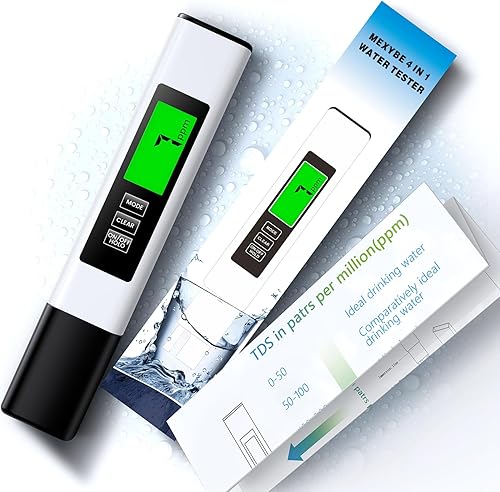
A TDS meter is a cheap diagnostic that tells you immediately whether your overall mineral load is stable. You don't need to obsess over it; you do want to know if it's steadily climbing or crashing.
Problem 3: Copper exposure
Shrimp are extraordinarily sensitive to copper. Concentrations harmless to fish — and harmless to the human water supply — can be lethal to shrimp.
Sources to check:
- Tap water that runs through copper plumbing. Some municipal supplies are fine; some pull noticeable copper from old household pipes, especially first-draw cold water in the morning. Run cold water for 30 seconds before filling, or use it from a tap that's been used recently.
- Fish medications that contain copper. Most ich and parasite treatments are copper-based. If the tank ever held fish that were medicated, residual copper in the substrate or filter media can leach for months.
- Plant fertilizers. Many comprehensive fertilizers include trace copper. Check the label. Shrimp-safe fertilizers exist; use those.
- Driftwood that was treated. Some commercially-sold driftwood has been pressure-treated with copper-based preservatives.
A water conditioner that detoxifies heavy metals (Seachem Prime is the standard) handles trace copper from tap water but doesn't undo a contaminated tank.
Problem 4: Predation by tankmates you didn't think were predators

The list of fish that will eat baby shrimp is much longer than the list of fish that won't. "Peaceful community fish" generally refers to fish that won't attack other adult fish — they will absolutely eat anything shrimplet-sized that drifts past.
Tetras, rasboras, gouramis, danios, killifish, most cichlids, and any of the larger nano fish will pick off shrimplets. Adult Neocaridina are usually safe from anything smaller than a betta. The shrimplets are the ones being eaten, and you may never see it happen — predation in the first 48 hours after hatching is silent and total.
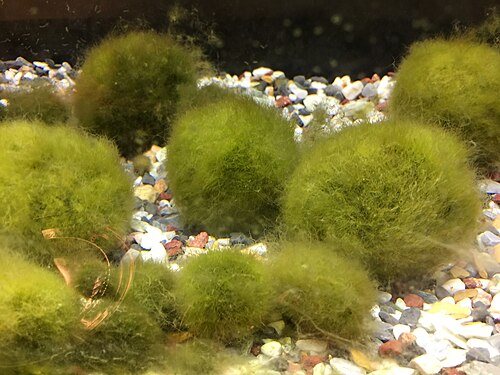
If you have any fish in your shrimp tank and your colony isn't growing, this is probably your answer. The solution is usually a dedicated shrimp-only tank, or aggressive cover (dense moss, lots of botanicals, leaf litter) that gives shrimplets refuge until they're big enough not to be food. Peer-reviewed research found shrimp spend up to 88.8% of daytime hours in shelter, with strong preference for moss and soft organic surfaces over bare rock or glass. A bare-bottomed tank with nothing but driftwood is a hard environment for shrimplet survival even without fish.

Problem 5: Filter intake claiming the babies
A standard hang-on-back or canister filter intake will pull in shrimplets — they're 1–2mm long when they hatch. You may not realize your colony is producing fine; the babies are being killed on the impeller within hours of hatching.
The fix is a foam pre-filter sponge over the intake. They cost a few dollars and slip over standard intake tubes. Better still for a dedicated breeding tank: a sponge filter, which is the appropriate filtration for any shrimp-focused setup. Sponge filters provide gentle biological filtration, generate no intake suction strong enough to harm shrimplets, and the sponge surface itself becomes a biofilm grazing zone.

A note on the broader picture
Your shrimp are descendants of a freshwater shrimp species native to China, South Korea, and Taiwan. In the wild they live in slow-moving streams and ponds with abundant cover, decomposing leaf litter, and constant grazing surfaces. Tanks that look like that breed shrimp. Tanks that look like a sterile show display generally don't.
A separate but important note: an ecological risk screening summary conducted by the USFWS classified N. davidi as a high-risk species due to its invasion history, potential for establishment within the U.S., and documented impacts in introduced areas. Once your colony does take off, never release surplus shrimp into local waterways — give them to fellow hobbyists, donate to a fish store, or humanely euthanize. Established feral populations have already disrupted native ecosystems on multiple continents.
What to do if the colony still isn't growing
If you've checked all five and breeding still isn't happening, in order of likelihood: re-test GH with a fresh test kit (old reagents lose accuracy), check for fish you may have forgotten you have (tiny pest snails are fine; that one tetra you thought was harmless is not), and consider that your colony may simply be too small. Below about six adults, the social dynamics that trigger active breeding don't reliably establish. Adding ten more shrimp from a different source often kicks a stalled tank into gear.
Some links in this article are affiliate links — if you buy through them we earn a small commission at no extra cost to you. We only recommend gear we've personally used.